Breaking news - www.breakingnews.com

2 Body scanners coming to all Austrailian International airports from July


Passengers heading in and out of Australia's international airports will be facing random screenings via new body scanners set to be deployed around the country from July, with the government insisting that passenger privacy and safety is at the top of the list when it comes to the new technology.
Scanner output
A millimetre-wave scanner shows a stick figure outlined with areas of interest highlighted in yellow.
(Credit: Department of Infrastructure and Transport)
Millimetre-wave body scanners will be deployed in all of Australia's international terminals from the middle of the year, as part of the government's $200 million push to make the skies safer.
Unlike controversial scanners used by the Transportation Safety Authority (TSA) in the United States, however, the new scanners headed for Aussie shores display a screened passenger as a stick figure, with no discernible features visible. This means that men, women and children will all show up the same, with only metal and some non-metal areas highlighted.
The scanners have the sign-off from the privacy commissioner, and they won't store any of the images, destroying them immediately in order to protect privacy.
The government has also addressed potential health concerns raised by the scanners, comparing the amount of radiation absorbed from the scanners to that of "passive exposure to a mobile phone used several metres away". However, this may come as cold comfort, if recent research from the World Health Organisation (WHO) on the cancer-causing effects of radiation is to be believed.
While passengers will be randomly selected for the new scanners at launch in July, the government said that as time goes on, the Customs and Border Protection Service may incorporate the equipment into the standard-screening regime for passengers, with those objecting to the scanners for any reason other than a verifiable medical condition to be unable to board their flight.
Despite this proposed no-scan, no-fly policy, the government has no plans to deploy the scanners at the country's domestic airports.
The office of the minister for Infrastructure and Transportation told ZDNet Australia that the scanners will be looking for items that can slip through conventional metal detectors, like ceramic knives and other makeshift, non-conventional weaponry.
The scanners were trialled by the Department of Infrastructure and Transport prior to launch, in tandem with a trial of x-ray-scanning technology by the Customs and Border Protection Service. Unlike the millimetre-wave scanners, the customs trial was an opt-in screening, triggered only if customs agents had a high suspicion of passengers carrying drugs internally.

0 Dying in an Internet Cafe Is More Terrible Than You Can Imagine


As Kotaku previously reported, a 23-year-old man recently died at a Taiwanese internet cafe. Nine hours later, someone noticed.
The country's Next Media Animation—who's behind all those computer animation recreations—portrayed the event in its news story. The computer CG scenes, along with the actual news scene, make the clip not only highly disturbing, but also horribly depressing.
Watch the Next Media clip in the link below. While many Next Media clips are wacky or silly, this one is not. It contains graphic news images that might not be suitable for some viewers.


I posted this mainly to make a point of how wrapped up and unobservant people have become on a whole...

0 Concerns raised over use of fracking for ‘multi-billion Irish’ gas reserve


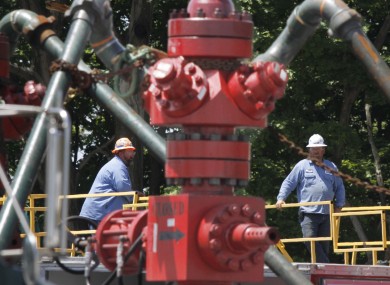
A NUMBER OF concerns have been raised over the possible use of ‘fracking’ to extract what is believed to be a major gas reserve in north-west Ireland.
A company with a licence for the area said today that the gas under Fermanagh and Leitrim could lead to hundreds of jobs, a multi-billion investment, and a supply of gas for decades.
However campaigners and environmentalists have urged caution over the controversial technique.
“The use of fracking has been outlawed in France and Bulgaria,” said Sinn Féin TD Michael Colreavy. “The practice, if introduced into Ireland, could well have environmental and health implications for people in the vicinity of the fracking activity”.
The practice is not likely to benefit the people of the area because, just like the gas, the money too will flow out of Ireland.
Donegal, Sligo, Clare, Leitrim and Roscommon County Councils have already moved to ban fracking in their areas.
The TD for Sligo-North Leitrim added that fracking would cause more harm to the area than benefits.
The Green Party has urged Minister Pat Rabbitte to be cautious about assessing the economic and environmental effects of the shale gas development.
“In addition to economic considerations, it is also clear that hydraulic fracking has the potential to be extremely divisive in the localities where extraction may occur, which will have a far more damaging social impact than any short term benefit that may accrue from the construction of exploration wells,” said Garreth McDaid, Green Party spokesperson for Energy, Communications and Natural Resources.
“These areas, which have traditionally suffered from population decline, will suffer further in terms of their desirability for inward migration, leaving existing residents with limited prospects of employment once the fracking roadshow has moved on”.

What is fracking?

Fracking is a way of extracting natural gas reserves from pockets in underground rock. Water and chemicals are pumped underground at high pressures to fracture rocks and allow the pockets of natural gas to escape.
The oil industry has used fracking for decades but it is only in recent years that the technology has advanced to make it possible to use as a technique for extracting gas reserves.

0 Loving a Sex Robot: Insanity or reality?


A perfect partner who's always happy and never complains, is apparently now a reality. But there's a catch - he or she is likely be made of plastic. From simple dolls to sophisticated robots, they seem to be winning the hearts and minds of people who've given up on finding true love. Gayane Chichakyan has more from the world of the synthetic spouse.

Can things actually get any worse?


1 Bomb-sniffing dogs posted outside the Israeli consulate New York


The NYPD has increased security at the Israeli consulate, synagogues and other Jewish cultural institutions throughout the city.
The rising tensions between Israel and Iranhave prompted the security increase in our area. Heavily armed police and bomb sniffing dogs were posted outside the Israeli consulate on Manhattan’s East Side.  CBS 2′s Hazel Sanchez reported seeing police cars, heavily-armed officers and K-9 units outside the consulate on Friday.White House officials believe Israel may be planning an attack on Iran’s nuclear program as early as this Spring. Should they strike, Iran has vowed to retaliate against Israel and its U.S. interests.
Israeli governmental buildings and Jewish soft targets like synagogues and community centers have been placed on high alert.“Unfortunately, the Iranians don’t like Israel and they don’t like the United States, so we become right at the top of their list in terms of targets,” security expert Bob Strang said.
The NYPD said it is increasing security at synagogues and other Jewish institutions after talks between Defense Secretary Leon Panetta and Israeli officials about a possible Israeli pre-emptive strike on Iran.“We know that the Iranians have the capability in Washington, New York, Los Angeles. They’re capable of actually committing a crime here — whether it be murder, whether it be activating some type of terrorist attack,” Strang said.“CBS This Morning” Senior Correspondent John Miller said Iran’s threat is very real. 
Security sources said that on three separate occasions — in 2002, 2003 and 2004 — suspected Iranian intelligence agents were caught in New York City conducting surveillance on landmarks and critical infrastructures looking for potential targets.
“Riding the number 7 train and filming out the front window of the train, so that they could document the path of the tunnel that runs under the United Nations’ building. Of course, they said they were tourists and they were just taking pictures, but it was 1 o’clock in the morning. They were suspected agents of the Iranian intelligence apparatus,” Miller said.Since then, the NYPD said it has been closely monitoring the conflict between Israel and Iran.“That is part of what has the New York Police Department raised up on alert now. 
They know about those instances and there are probably other instances of surveillance and planning that they don’t know about,” Miller said.There has been no specific threat made against institutions in our area, but police are warning officers and residents to stay extra vigilant just in case.

Ahh...Bomb sniffing dogs outside the Embassy then?..
It just so happens that "Nuclear Radiation" is odorless,
dogs are not really cut out for that job....now if the following article is anything to go by...get a radiation detector in there and your laughing.
excerpts from article:

ISRAELI EMBASSY IN NYC  A RADIATION HOT SPOT
by x Saturday, Oct. 14, 2006 at 1:05 PM
 
"One alleged radiation hot spot on Manhattan's east side has the potential for becoming a political hot spot: A strong radiation spike from the area of the Israeli Embassy. Officials would not comment on why they thought that particular area allegedly showed such a stunning peak in radiation.
 
The aerial survey is designed to help local officials react more quickly in the event of terrorists detonating a "dirty bomb" that releases radioactive material into the air. With the survey, police may be able to pinpoint the exact source of radiation by comparing new readings to their pre-existing "radiation map" of the area."


0 Prisoners sneak pig onto Vermont State police cruisers


Vermont State police are confronting a prisoner prank and investigating who's behind it. Inmates tasked with making decals of the official state seal for state police cruisers took some liberties with the design. And troopers are not happy about it.


Police, troopers, cops, the fuzz, and pigs; police officers are called a lot of names. Inmates apparently decided to use their creative sides, making sure that pigs made their way into the state seal for the first time since it was first designed more than three centuries ago.
Hundreds of cruisers patrol Vermont with the state seal standing out on both front doors. The seal was originally designed by Ira Allen in the 1770s. There's a tree, mountains and a cow to honor dairy farming in Vermont.
Original decal
Four years ago the state wanted more decals for cruisers, giving the job to the prison print shop in Windsor. Inmates were supposed to load the state crest image in as given to them, but someone decided to make a major change-- payback perhaps.
In the new decal, one of the spots on the cow is actually a pig. Pig is a derogatory term for police. A state trooper in Southern Vermont just noticed the altered artwork.


Modified
"And I apologize to them," Vt. Corrections Commissioner Andy Pallito said. "I think it's really unfortunate that somebody took it upon themselves to reach out and do this to them."
Pallito says the decals were recently put on cruisers. As many as 30 have the prankster pigs.
"We'll have to make sure we do a better job of quality assurance in the future to make sure this doesn't happen again," Pallito said.
State police aren't laughing either. In a statement, Maj.
 Bill Sheets said "While some may find humor in the decal modifications, the joke unfortunately comes at the expense of the taxpayers."
On Decal
Pallito expects the bill to replace the offending swine will run about $800.
The more you look at the decal the more you may see. We've heard from people who say in addition to the pig, there may also be a silhouette of a naked women underneath the cow.
As far as catching the inmate or person who did this, Pallito says it could be difficult because there is a lot of turnover in jail.


Source: http://www.wcax.com/story/16663947/prisoners-sneak-pig-into-vsp-decal


Sorry...I just thought this was too good not to post.


0 'Panetta believes Israel will strike Iran soon'

US defense secretary estimates Israel likely to strike Iran between April and June – before it reaches 'zone of immunity' in development of nuclear bomb, Washington Post columnist David Ignatius says


US Defense Secretary Leon Panetta believes that Israel is likely to strike Iran in the coming months, Washington Post columnist David Ignatius said Thursday.

"Panetta believes there is strong likelihood that Israel will strike Iran in April, May or June – before Iran enters what Israelis described as a “zone of immunity” to commence building a nuclear bomb," Ignatius wrote.
Asked by journalists whether he disputes the report, Panetta said, "No, I'm just not commenting."

He added, "What I think and what I view, I consider that to be an area that belongs to me and nobody else."

He noted that Israel has stated publicly that it is considering military action against Iran, adding that US has "indicated our concerns."


Panetta, along with US President Barack Obama warned Israeli officials against opting for a military offensive in Iran, saying it would jeopardize the international sanctions program and other non-military efforts to stop Iran from crossing the nuclear "red line."

Even so, Ignatius claimed that senior officials in the Obama administration have yet to decide how to respond if an Israeli military strike materializes.

The columnist states that "Israeli leaders are said to accept, and even welcome, the prospect of going it alone and demonstrating their resolve at a time when their security is undermined by the 'Arab Spring'."

Another strike in a few years

The Israeli scenario, according to Ignatius, is a five day limited offensive, followed by a UN-brokered ceasefire. The relatively light damage that is expected to be inflicted on Iranian nuclear facilities will require Israel to stage another offensive a few years down the line.

Ignatius notes that American officials see two possible options to dissuade Israel from attacking: Serious talks with Iran – including full access and supervision over its nuclear program – or increased US covert operations that will undermine the nuclear program to the extent that Israel is convinced an attack is no longer necessary.

However, such options might be in vein because Prime Minister Netanyahu has already made a decision to attack in the next six months, Ignatius claims.

Meanwhile, Defense Minister Ehud Barak on Thursday said that if sanctions are unsuccessful in compelling Iran to abandon its nuclear program, the international community will have to examine other options.

"There is a global understanding that if the sanctions don't achieve the coveted goal of stopping the Iranian military nuclear program, an operation would have to be considered," he said at the Herzliya Conference.

0 London Riots: Could police be libel for damage under 600 year old law?

The fallout from last summer’s riot continues to rumble on, with consequential loss claims against the police relying on principles that can be traced back to the age of Robin Hood.

Almost six months on from the summer riots in London, and other major UK cities, the impact on the nation and the insurance industry is still being felt.
An ancient statute was dusted off as hundreds of claims were brought by property owners, and their insurers, against the police authorities, forcing both parties to get to grips with the antiquated Riot (Damages) Act 1886. The government acted fast in August, passing extended new regulations to the time limit for claiming under the 1886 Act from 14 to 42 days and scrapped the mandatory claim form.
Claims were swiftly assessed and adjusted by insurers and submitted to the relevant police authority. Some claims have already been rejected, but most are awaiting determination by police authorities, who have requested further information from claimants. The outstanding claims have caused a growing controversy. Was all the claimed damage caused by rioters? Are consequential losses, particularly business interruption losses or rental losses, recoverable under the 1886 Act?

A question of principle
It is unclear what principles will be applied by the courts, with some questioning why the Act compels police to pay riot damages. The reasons take us to unrest in the 18th century and right back to an ancient story reminiscent of Robin Hood.
Under the 1886 Act, a building, or property within, has been damaged, stolen or destroyed by any persons “riotously and tumultuously assembled together”, compensation must be paid by the local police authority. The rationale behind this is seen in the legal history of riots. Before the creation of the police service by Sir Robert Peel and the Metropolitan Police Act 1829, law and order was a communal responsibility.
When the Saxons of towns and villages in England refused to chase and capture the Robin Hoods of their time and return goods stolen from the Norman nobility, the King decided to make the community itself pay. It resulted in Edward I passing the Statute of Winchester 1285. This made the local community, then called the hundreds, liable if they failed to prevent felonies, including the burning of houses.

Magistrates were introduced by Edward III
in the Justices of the Peace Act 1361 and had a dual role of policing the area on behalf of the community and punishing offenders. The law developed through the Elizabethan age bringing the Riot Act 1714. As well as introducing the phrase “reading the Riot Act” it provided the same statutory remedy for a spate of 18th century riots in towns and cities across the county. A plaintiff whose buildings were damaged by riot could bring a claim in court against the hundreds, city or town.
It was this provision that was consolidated and reformed, after the introduction of police forces, into the 1886 Act. The rationale behind the 1886 Act is not just public compensation but the historical concept that it is the entire community’s duty to prevent riots. The Police Act 1996 requires each authority to maintain an efficient and effective police force. If a riot takes place, the police authority is strictly liable for the damage as it is presumed to have resulted from defective policing.
As Justice Lyell commented in 1967: “There is nothing secret or furtive about a crowd of people who are acting riotously and tumultuously. It seems to me that the right to compensation from public funds was given because the public authorities had failed to protect the public who were menaced by a threat which was, or ought to have been, obvious to the forces of law and order as they existed from time to time”.


Read more: http://www.postonline.co.uk/post/analysis/2142766/riot-claims-disorderly-conduct#ixzz1lIiu1hd4 

0 The UK Drone Industry Plan Huge PR Push


Companies seeking to enable the routine use of surveillance drones across Britain are planning a long-term public relations effort to counter the negative image of the controversial aircraft.
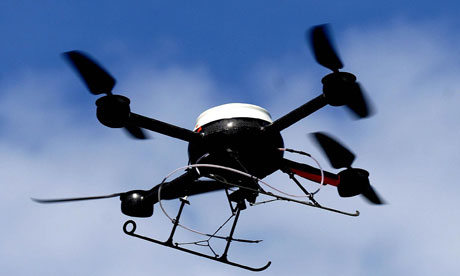
A police aerial surveillance drone

The Unmanned Aerial Vehicle Systems Association (UAVSA), a trade group that represents the drone industry to the UK government, has recommended drones deployed in Britain should be shown to "benefit mankind in general", be decorated with humanitarian-related advertisements, and be painted bright colours to distance them from those used in warzones, details from a UAVSA presentation show.
Plans are also under way to establish corridors of segregated airspace to fly drones – or UAVs – between restricted "danger zones" (airspace where test flights take place) in isolated parts of England and Wales.
A series of presentations given by industry figures in recent months show public opposition is considered a major hurdle. UAVSA has discussed how it could use the media to disseminate favourable stories, creating a narrative that presents the introduction of drones in the UK as part of a "national mission".
A talk three months ago at the Royal Aeronautical Society by Colin Burbidge, UAVSA's head of information services, cited the website Drone Wars UK as an example of the negative publicity the industry must overcome. Drone Wars documents the use of drones in conflict zones and features a database of more than 80 UAV crashes around the world dating back four years.
Chris Cole, the Drone Wars founder, accused the industry of trying to undermine "genuine public debate" about the use of UAVs in Britain. "They know the public don't like it," Cole told the Guardian.
John Moreland, the general secretary of UAVSA, said the industry was uncomfortable with the word "drones" and wanted to find new terminology. "If they're brightly coloured, and people know why they're there, it makes them a lot more comfortable," he said.
"We want to be associated with safe, civil applications [of UAVs] that have a humanitarian, ecological and environmental benefit."
Another UAV consortium, Astraea, which includes the arms manufacturerBAE Systems, has been advised by airspace regulator the Civil Aviation Authority (CAA) to "paint a more positive picture" of drones to combat fears about "big brother" and "spy in the sky".
Astraea has received more than £30m in public funding as part of an eight-year programme aiming to enable the deployment of drones in all classes of UK airspace, unhindered by restrictive conditions of operation.
Since July 2010, the Ministry of Defence has tested Watchkeeper drones at two restricted "danger zones" in Aberporth, west Wales, at a dedicated UAV centre, and at Salisbury Plain, Wiltshire, a military zone.
UAVs for commercial use have also been tested by private firms in Aberporth, the Guardian has learned, with plans afoot to create corridors of segregated airspace between the Wales drone site and others, including Salisbury, although the CAA says a formal proposal has not yet been made.
Industry sources see the move as part of a progression towards larger sections of UK airspace becoming segregated in the near future, leading to an area of the sky sanctioned explicitly for the use of drones for a range of purposes, including law enforcement, border patrol, firefighting and road traffic monitoring.
The full integration of UAVs across all levels of UK airspace, however, is still considered a long way off.
Plans to introduce military-style drones across the UK, the full scale of which was first revealed by the Guardian in January 2010, have been much delayed owing to concerns they could pose a risk to manned aircraft in Britain's airspace without advanced "sense and avoid" detection technology installed.
Small, low-flying UAVs of 20kg or less – similar in size to radio-controlled model aircraft – can legally be flown under existing UK regulations, provided they have a permit from the CAA.
The latest figures obtained by the campaign group Big Brother Watchshow 115 permits were issued between January 2009 and October 2011, with 43 issued between January and October this year. At least five police forces – the Met, Merseyside, Essex, Staffordshire and British Transport police – are known to have used them.
There remains a high level of police interest in military-style drones, which, unlike small UAVs, can fly at heights of more than 20,000ft, making them invisible from the ground.
At a London aerospace conference in October, a Home Office official confirmed the ongoing intention to use UAVs for "persistent reconnaissance" as part of the South Coast Partnership, a government-backed project in which Kent police and others are developing a national drone plan.

0 Hacked companies still not telling investors

At least a half-dozen major US companies whose computers have been infiltrated by cyber criminals or international spies have not admitted to the incidents despite new guidance from securities regulators urging such disclosures.


Top US cybersecurity officials believe corporate hacking is widespread, and the Securities and Exchange Commission (SEC) issued a lengthy "guidance" document on Oct 13 outlining how and when publicly traded companies should report hacking incidents and cybersecurity risk.
But with one full quarter having elapsed since the SEC request, some major companies that are known to have had significant digital security breaches have said nothing about the incidents in their regulatory filings.
Defense contractor Lockheed Martin Corp, for example, said last May that it had fended off a "significant and tenacious" cyber attack on its networks. But Lockheed's most recent 10-Q quarterly filing, like its filing for the period that included the attack, does not even list hacking as a generic risk, let alone state that it has been targeted.
A Reuters review of more than 2,000 filings since the SEC guidance found some companies, including Internet infrastructure company VeriSign Inc and credit card and debit card transaction processor VeriFone Systems Inc, revealed significant new information about hacking incidents.
Yet the vast majority of companies addressing the issue only used new boilerplate language to describe a general risk. Some hacking victims did not even do that.
"It's completely confusing to me why companies aren't reporting cyberrisks" if only to avoid SEC enforcement or private lawsuits, said Jacob Olcott, former counsel for the Senate Commerce committee. The chair of that committee, John D. Rockefeller, urged the SEC to act last year.
Stewart Baker, a corporate attorney and former assistant secretary of the Department of Homeland Security, said the SEC guidance was detailed enough that companies that know they have been hacked will "have to work pretty hard not to disclose something about the scope and risk of the intrusion."
Otherwise, "this is an opportunity for enforcement that practically hands the case to the SEC on a platter," Baker said.
Lockheed spokesman Chris Williams said hacking was covered under the company's most recent annual securities filing, which has as one of many risk factors "security threats, including threats to our information technology infrastructure, attempts to gain access to our proprietary or classified information, threats to physical security of our facilities and employees, and terrorist acts."

0 Green vaccines could stop "The bad guys" causing a 'Contagion'


The staff of a federally funded program at Texas A&M is looking inside of plants to find better, faster vaccines to prevent possible "Contagion"-like situations or bio-terror threats.

0 U.S. plans to end Afghan combat role early, amid Taliban's confidence of Return


(Reuters) - The United States took Kabul by surprise by laying out plans to end its Afghan combat role earlier than expected, just after the leak of a secret report that the Taliban is confident of regaining control of the country.

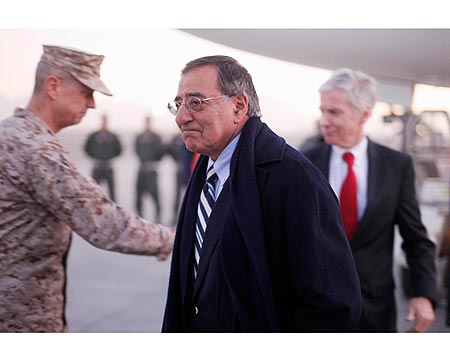
U.S. Defense Secretary Leon Panetta said late on Wednesday the United States would stop taking the lead role in combat operations before the end of 2013 and step into a supporting role as it winds down its longest war.
He said U.S. forces would remain "combat-ready" but would largely shift to a train-and-assist role as Afghan forces take over responsibility for security ahead of a 2014 deadline for full Afghan control.
The announcement, ahead of a meeting of NATO defense ministers in Brussels, was greeted with surprise in Kabul, where a senior Afghan security official said the move "throws out the whole transition plan."
"The transition has been planned against a timetable and this makes us rush all our preparations," the official said.
"If the Americans withdraw from combat, it will certainly have an effect on our readiness and training, and on equipping the police force," he said, adding that his government had not been informed of the change in plans.
NATO Secretary-General Anders Fogh Rasmussen insisted there was no change in NATO's plans and it expected responsibility for security to be handed over to the Afghan security forces by mid-2013 and for them to have full control at the end of 2014.
"It is of course of crucial importance that this change of role takes place in a coordinated manner," he said, emphasizing that the changes of role would have to take into account "the actual security situation on the ground."

0 Militias battle in heart of Tripoli

A gun battle erupted between rival militias in the heart of the Libyan capital on Wednesday, underscoring the country’s continued instability after the overthrow of its longtime ruler.


Fighters from the industrial city of Misurata and the western mountain city of Zintan engaged in what witnesses and security officials described as a ferocious gunfight, purportedly over a prisoner.

“I’m not sure whether fighters from Misurata or Zintan started it,” said Naji Arabi, a 54-year-old electricity company employee. He was driving home from work about 4pm when he encountered the gunfire. “Obviously it’s scary, because I have five children.”
Libya has been bedevilled by the transitional government’s seeming inability to establish authority over the well-armed former rebel fighters who overthrew Muammer Gaddafi in a campaign aided by Nato air strikes.
Heavily armed militias have stepped into the vacuum, carving the country into local fiefdoms. Their fighters express loyalty to the ruling national transitional council but answer only to their own commanders.
Though the numbers of burly young men driving pick-up trucks mounted with machineguns have diminished over the past three months since the formal declaration of victory over Colonel Gaddafi, violence continues to erupt.
Several militias from outside the capital have set up bases in Tripoli. They clash with each other intermittently, often because of disputes over who controls which neighbourhoods of the city.
The latest incident took place in one of the most upmarket districts of the capital, at a beach resort next to a hotel in the heart of the city, witnesses and security officials said. It was the first time in weeks that a major gun battle had broken out right in the centre of the capital
Ambulance sirens could be heard and plumes of smoke rose from the area of the fighting.
The exact cause of the exchange was murky. Misurata fighters were occupying the beach, which was once controlled by Saadi Gaddafi, one of the slain former ruler’s sons.
According to security officials, Misurata fighters were holding a prisoner whom the Zintan militiamen claimed. Fighting erupted, including an explosion probably caused by a rocket-propelled grenade launch, witnesses said.
Others said the fighting erupted over control of the resort complex, which lies next to a new, but never opened, Marriott hotel built before Libya’s February 2011 uprising.
Security officials told news agencies that no one was hurt in the fighting. But one of the security officials guarding the beach after the fighting ended said at least one person was killed.

Source:http://www.ft.com/cms/s/0/5675e6b8-4d05-11e1-bdd1-00144feabdc0.html#axzz1lDASGBY3


OH as long as they were only dead...and not hurt, all should be ok then.